
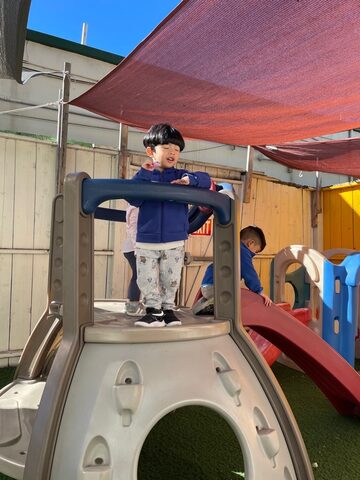
The best preschool in San Leandro for your family is one that combines state licensing, low teacher-to-child ratios, a play-based curriculum, and a schedule that fits your working hours — all within a reasonable commute. San Leandro families are fortunate: the city sits at the geographic center of Alameda County, making it accessible from San Lorenzo, Castro Valley, Hayward, and Oakland. But that central location also means there are dozens of options, and not all of them meet the same standards.
Under California's child care licensing program, every licensed childcare center in the state must comply with Title 22 health, safety, and staffing regulations. The American Academy of Pediatrics further recommends that early childhood programs limit screen time and prioritize outdoor play and responsive caregiving. And the U.S. Department of Labor's National Database of Childcare Prices documents that Alameda County center-based care costs 22% above the California average — making it critical for local families to understand what they are paying for.
This guide walks you through everything that matters when choosing a preschool in San Leandro in 2026: California licensing requirements, what ratios actually mean, how to compare programs, what questions to ask on a tour, and how to tell the difference between a center that simply watches your child and one that helps them grow.
What Makes a Preschool "the Best"?
"Best" is not a marketing claim — it is a set of verifiable standards. Here is what to look for, in order of importance:
| Criterion | Why It Matters | What to Verify |
|---|---|---|
| State licensing | California requires all childcare centers to be licensed under Title 22. Unlicensed care has no safety inspections, no background checks, and no ratio requirements. | Ask for the facility's license and verify it with California's child care licensing program. |
| Teacher-child ratios | California Title 22 mandates minimum ratios. Lower ratios mean more individual attention. | See the ratio table below. |
| Teacher qualifications | Title 22 requires teachers to have at least 12 ECE units and 50 days of supervised experience. Directors need additional administration units. | Ask about teachers' credentials and how long they have been on staff. |
| Curriculum and philosophy | Whether play-based, Montessori, Reggio Emilia, or academic, the program should match your child's temperament and your family's values. | Ask to see a daily schedule and sample lesson plans. |
| Hours and schedule | Many San Leandro families commute along I-880 or take BART. A center's hours need to match your commute. | Confirm opening, closing, and late-pickup policies. |
| Meals and nutrition | Some centers include breakfast, lunch, and snacks; others require you to pack everything. This is both a cost and a convenience factor. | Ask what meals are included and whether the center accommodates food allergies. |
| Safety and security | Secure entry, fenced play areas, emergency drills, and staff trained in pediatric CPR and first aid. | Walk the facility and ask about emergency procedures. |
| Parent communication | Daily reports, photos, open-door policies, and regular conferences keep you informed. | Ask which app or method the center uses to communicate with families. |
California Licensing Requirements: What They Actually Mean
Every licensed childcare center in California must comply with Title 22 of the California Code of Regulations. These are the minimum standards — a center that meets only the minimums is compliant, but the best centers go beyond them.
Teacher-Child Ratios (Title 22)
| Age Group | Minimum Ratio | What This Looks Like |
|---|---|---|
| Infants (0–18 months) | 1:4 | 1 fully qualified teacher for every 4 infants |
| Toddlers (18–30 months) | 1:6 | 1 fully qualified teacher for every 6 toddlers |
| Preschool (2–5 years) | 1:12 | 1 fully qualified teacher for every 12 children |
| Preschool (3–5 years, with aide) | 1:18 | 1 teacher + 1 aide for every 18 children |
| School-age (K–14 years) | 1:14 | 1 teacher for every 14 school-age children |
What this means for San Leandro parents: A center that maintains a 1:8 or 1:10 ratio in its preschool classrooms — above the 1:12 minimum — is giving your child more individual attention than the state requires. That is a strong quality signal.
Teacher Qualifications (Title 22)
- Teachers: Must complete 15 hours of health and safety training, plus at least 12 units in early childhood education (ECE), including child development, child psychology, and program/curriculum courses. Teachers working with infants need 3 additional specialized units.
- Directors: Need a high school diploma (or GED), 12 ECE units, 3 units in administration or staff relations, and at least 4 years of teaching experience — or an AA/BA in ECE with fewer years of experience.
- Aides: Must be at least 18 years old and complete at least 6 ECE units (or be enrolled in at least 2 units per semester until the 6 are completed).
Licensing vs. Accreditation
Licensing is mandatory. Accreditation is voluntary and goes further.
| Licensing (Title 22) | Accreditation (NAEYC or equivalent) | |
|---|---|---|
| Required? | Yes — illegal to operate without it | No — voluntary quality benchmark |
| Who regulates? | California's state child care licensing program | National Association for the Education of Young Children (NAEYC) or similar bodies |
| What it measures | Minimum health, safety, and staffing standards | Curriculum quality, teacher-child interactions, family engagement, ongoing improvement |
| How often inspected? | Every 3 years (or upon complaint) | Every 5 years for reaccreditation |
A licensed center that is also accredited by NAEYC has chosen to meet a higher bar. But many excellent centers in San Leandro are licensed and high-quality without formal accreditation, because the accreditation process is expensive and time-consuming.
Types of Childcare in San Leandro
San Leandro has three main types of licensed childcare. Understanding the differences helps you choose what fits your family.
| Type | Description | Typical Ages | Typical Hours |
|---|---|---|---|
| Childcare center | A licensed facility with multiple classrooms, structured curriculum, and a director. Staff must meet Title 22 qualifications. | 18 months–6 years (some serve school-age) | 7 AM–6 PM (some offer extended care) |
| Family childcare home | A licensed provider caring for a small group of children in their own home. Maximum 14 children with an assistant. | 0–12 years (varies by provider) | Varies; some offer flexible or overnight care |
| In-home / nanny | A caregiver who comes to your home. Not regulated by Title 22 unless they work for an agency. | Any age | Fully flexible |
For most San Leandro families seeking preschool: A licensed childcare center offers the best combination of structured learning, social development, safety oversight, and predictable hours. Family childcare homes can be excellent for infants and toddlers who benefit from a smaller, home-like setting.
Programs Available at San Leandro Preschools
Most centers in San Leandro offer programs by age group. Here is what to expect from each:
Toddler Care (18 months–3 years)
Toddler programs focus on language development, social skills, self-help skills (handwashing, feeding, toileting), and sensory play. The California ratio minimum is 1:6, but quality centers often staff closer to 1:4 or 1:5.
Preschool (3–4 years)
Preschool builds pre-academic skills through play: letters and numbers, storytelling, art, music, science exploration, and cooperative play. The ratio minimum is 1:12, but quality centers often maintain 1:8–1:10.
Pre-Kindergarten (4–5 years)
Pre-K is the year before kindergarten. It emphasizes kindergarten readiness: letter recognition, writing, counting, following multi-step instructions, and social-emotional regulation. Many San Leandro centers combine preschool and Pre-K into one classroom with differentiated activities.
Before & After School Care (5–12 years)
For families with children in San Leandro Unified School District (SLUSD) elementary schools, before and after school care provides a safe place for homework help, outdoor play, and enrichment during the hours parents are commuting or working.
Summer Programs
Most San Leandro centers offer summer programming for ages 2–6 (and sometimes school-age). These run June through August and include water play, outdoor exploration, themed weeks, and field trips for older children.
How to Compare Preschools in San Leandro
Once you have identified 3–5 centers to evaluate, compare them side by side:
| Question | Why It Matters |
|---|---|
| Is the center licensed? | Non-negotiable. Verify the license. |
| What are the actual ratios in each classroom? | Lower than the 1:12 minimum is a quality signal. |
| How long has the director been there? | Director turnover correlates with program instability. |
| What is the staff turnover rate? | High turnover means your child keeps losing trusted adults. |
| Are meals included? | Free meals save $200–$400/month and ensure consistent nutrition. |
| What is the daily schedule? | Look for a balance of structured activity, free play, outdoor time, and rest. |
| How does the center handle discipline? | Look for positive guidance, not punishment or exclusion. |
| What is the illness policy? | When must a child stay home? When can they return? |
| What is the potty-training policy? | Some centers require children to be potty-trained by age 3; others assist with training. |
| How does the center communicate with parents? | App-based daily reports, photos, open-door policy, parent-teacher conferences. |
| What is the tuition? | See our companion guide: Childcare Costs in San Leandro: What Families Can Expect to Pay in 2026, or review our tuition and payment options. |
| Is tuition assistance available? | Many centers accept CalWORKs, Alternative Payment vouchers, or offer internal sliding-scale tuition assistance. |
Questions to Ask on a Preschool Tour
A tour is your best opportunity to see a center in action. Print these and bring them with you:
- "Can you show me a classroom during activity time?" — Watch how teachers interact with children. Are they on the children's level? Are they engaged or just supervising?
- "What is your actual teacher-child ratio in this classroom today?" — The posted ratio and the real ratio can differ.
- "How long has each teacher in this room been with the center?" — Consistency matters more than credentials alone.
- "Can I see your daily schedule?" — Look for outdoor time, free play, structured activities, meals, and rest.
- "How do you handle a child who is struggling — crying, hitting, not sharing?" — Listen for positive guidance strategies.
- "What is your policy for screen time?" — The American Academy of Pediatrics recommends zero screen time under 18 months and very limited use for 2–5 year olds.
- "How do you communicate with parents?" — Look for daily reports, a mobile app, open-door policy, and regular conferences.
- "What happens if I am late for pickup?" — Understand the late fee policy before you need it.
- "Are you currently at capacity, and is there a waitlist?" — San Leandro centers typically have 3–5 month waitlists; some are longer.
- "What are the next steps to enroll?" — Get the timeline, required documents, and deposit information.
San Leandro Childcare Landscape at a Glance
San Leandro's childcare market sits in the accessible-to-mid-range tier of Alameda County. Here is how it compares to nearby cities:
| Area | Typical Monthly Cost (Center-Based) | Waitlist Length | Provider Density |
|---|---|---|---|
| San Leandro | $1,200–$1,800 | 3–5 months | Moderate — mix of centers and family homes |
| Castro Valley | $1,200–$1,700 | 3–5 months | Lower — fewer centers, more family homes |
| Hayward | $1,200–$1,700 | 3–5 months | Moderate — more family homes than centers |
| San Lorenzo | $1,100–$1,600 | 2–4 months | Lower — primarily family homes |
| Oakland (hills) | $1,800–$2,800 | 6–12 months | High — many centers, premium pricing |
| Berkeley | $1,800–$2,400 | 10–16 months | High — cooperatives and progressive models |
For families in San Lorenzo, Castro Valley, and Hayward: San Leandro's central location makes it a practical choice. Bubbly Tots Learning Center, located in San Leandro directly off I-880, is a short drive from all three communities.
What to Avoid: Red Flags During Your Search
- No license visible. Every licensed center in California must post its license. If you cannot find it, leave.
- "We do not need to be licensed." This is either false or means the provider is operating illegally. Walk away.
- Ratios consistently at the maximum. A center that always runs at 1:12 for preschoolers is meeting the letter of the law, not the spirit of quality.
- No outdoor play area, or no daily outdoor time. California regulations require outdoor space and daily outdoor activity.
- Excessive screen time. The American Academy of Pediatrics recommends zero screen time under 18 months and very limited use for 2–5 year olds.
- High staff turnover. If the center cannot tell you how long teachers have been there, or if you see new faces every visit, that is a warning sign.
- No clear illness policy. A center that takes in visibly sick children is not protecting your child.
- Pressure to enroll immediately without a tour. A quality center wants you to visit, ask questions, and feel confident.
How Bubbly Tots Learning Center Meets These Standards
Bubbly Tots Learning Center (BTLC) is a state-licensed childcare center in San Leandro serving children from 18 months to 6 years old. Here is how it lines up against the criteria in this guide:
| Standard | Bubbly Tots Learning Center |
|---|---|
| State licensing | State-licensed and state-certified under California Title 22 |
| Location | 963 Manor Blvd, San Leandro, CA 94579 — directly off I-880 |
| Ages served | 18 months to 6 years — toddler care, preschool and Pre-K, before & after school, and summer |
| Hours | 7:00 AM–6:00 PM, Monday through Friday |
| Classrooms | Four separate age-group classrooms, serving up to 72 children |
| Meals | Breakfast, lunch, and two snacks included through the USDA food program |
| Safety | Secure, state-licensed facility — see our safety page for details |
| Parent communication & payments | ProCare for family updates and online payments, plus PayPal/card and Zelle, with auto-pay available |
| Tuition & assistance | Roughly $610–$1,055/month by schedule; $100 registration; sibling discount. Accepts subsidies (4Cs of Alameda County, BANANAS, Hively) and military/GSA fee assistance — see tuition assistance |
| Tours | Book a tour or call/text 510-351-0300 |
FAQ
What is the best preschool in San Leandro?
The best preschool for your family depends on your child's age, your schedule, and your priorities. Look for a state-licensed center with ratios below the Title 22 maximum, qualified and experienced teachers, a play-based curriculum, included meals, and hours that match your commute. Schedule a tour at Bubbly Tots to see how a San Leandro center meets these standards.
How do I verify a preschool's license in California?
Ask the center for its license number, then look it up through California's child care licensing program. You can also check for any complaints or violations on record.
What is the teacher-child ratio for preschool in California?
California Title 22 requires a minimum ratio of 1:12 for preschoolers (ages 2–5) — one fully qualified teacher for every 12 children. With an aide, the ratio can extend to 1:18. Quality centers often maintain lower ratios, such as 1:8 or 1:10.
What age should my child start preschool in San Leandro?
Most children in San Leandro start preschool between ages 2 and 3. Toddler care programs accept children as young as 18 months. The right age depends on your child's developmental readiness and your family's schedule. See our guide: What Age Should My Child Start Preschool in San Leandro?
Does San Leandro have free preschool programs?
San Leandro Unified School District offers Transitional Kindergarten (TK) for 4-year-olds at no cost. For children under 4, the California State Preschool Program (CSPP) provides free or low-cost preschool for income-eligible families. Some centers, including Bubbly Tots, offer tuition assistance for qualifying families.
How long are preschool waitlists in San Leandro?
San Leandro preschool waitlists typically run 3–5 months, shorter than Berkeley (10–16 months) or Oakland hills (6–12 months) but still significant. If you are planning for fall enrollment, start your search in the spring — or earlier.
What is the difference between daycare and preschool in San Leandro?
Daycare primarily provides supervision and basic care during working hours. Preschool provides a structured curriculum focused on early learning, social development, and kindergarten readiness. Many San Leandro centers, including Bubbly Tots, combine both: full-day care with an embedded preschool curriculum.
Ready to See a San Leandro Preschool in Person?
Reading about preschools can only take you so far. The best next step is to visit a center, watch teachers interact with children, and ask your questions in person.
Book a tour at Bubbly Tots Learning Center — or call/text 510-351-0300 to schedule a visit. We serve families from San Leandro, San Lorenzo, Castro Valley, Hayward, and throughout the area.
Related Articles
- How to Choose the Right Childcare in San Leandro: A Parent's Guide
- Childcare Costs in San Leandro: What Families Can Expect to Pay in 2026
- Preschool vs. Pre-K vs. TK in San Leandro: What's the Difference?
- 6 Ways to Help Your Child Get Ready for Preschool
Sources: California's child care licensing program; California Code of Regulations, Title 22; U.S. Department of Labor, National Database of Childcare Prices (2022 dataset); 4Cs of Alameda County; American Academy of Pediatrics. Data current as of July 2026.
Explore learning at Bubbly Tots
See how caring routines, play, and family communication come together in our San Leandro programs.
Explore programs